Investigating the Impact of Flip as a CSCL tool on ESL Learners’ Speaking Ability
View Full PaperSummary
This research proposal investigates whether Flip, a video-based CSCL platform, can improve ESL learners' oral presentation skills through structured peer feedback. It outlines a mixed-methods study design with Hong Kong secondary school students.
Introduction
This research proposal seeks to explore the potential of Flip, a Computer-Supported Collaborative Learning (CSCL) tool, to support the development of speaking ability in English as a Second Language (ESL) learners. Released in 2014, Flip is a digital learning platform which allows for social interaction in the form of short videos in a virtual learning environment (Donovan, Besser, & Green, 2022). As ESL speaking skills are an essential component of communication and social interaction and are crucial for success in academic and professional settings (Namaziandost et al., 2019), investigating the efficacy of Flip as a CSCL tool holds promise. CSCL has been identified as a promising approach to teaching and learning, as it comprises a range of strategies intended to promote and support collaborative learning (Goodyear, Jones, & Thompson, 2014). This research proposal will thus explore the potential of Flip to facilitate the autonomous, creative, productive work of collaborating learners, as well as discuss potential effective uses of the platform in the classroom, in order to help improve ESL learners’ speaking skills.
Literature Review
English as a Second Language (ESL) refers to a language learning context in which non-native or non-fluent speakers of English are required to use the language in order to effectively communicate (Boonkit, 2010). Speaking skills are particularly essential for effective communication between native English speakers and ESL learners (Zaremba, 2006). Researchers have identified a number of factors related to speaking proficiency, including pronunciation, vocabulary, collocation, listening skills, sociocultural factors, affective factors, and other linguistic and sociolinguistic competence such as grammatical, discourse, sociolinguistic, and strategic competence (Tam, 1997; Shumin, 1997). Despite the motivation to improve their speaking skills, ESL learners often lack opportunities to practice speaking outside the classroom and are rarely exposed to native English speakers (Zhang, 2009). As such, ESL teachers need to provide students with a variety of speaking tasks and frequent speaking opportunities to facilitate the development of ESL learners’ speaking confidence and competence (Tam, 1997; Zhang, 2009).
Computer-Supported Collaborative Learning (CSCL) has been used in a variety of language learning contexts to facilitate student communication and interaction via digital tools. A number of studies have focused on the use of CSCL to support language learning. For example, Adamidi et al. (2017) conducted a study that assessed the efficacy of Problem-Based Learning (PBL) in Moodle as a CSCL environment among high school students in Greece. The findings of the study revealed a significant improvement in students’ collaboration and language learning skills. Similarly, Lehtonen and Tuomainen (2003) studied the effects of “Virtually Finnish”, a CSCL virtual “learning arena” for students to practice Finnish language skills, on the learning of Finnish among undergraduate students in the United States. The research suggested that the implementation of CSCL resulted in a significant enhancement of reading and writing skills in participants. In addition, the participants developed their collaboration and negotiating skills through engaging in collaborative dialogues. Furthermore, Vega, Stanfield and Mitra (2020) evaluated the impact of CSCL on the development of reading comprehension among elementary school students in the United States. The study found that the use of CSCL significantly improved the participants’ ability to read complex texts with minimal teacher intervention. These findings suggest that CSCL is a promising approach to teaching and learning ESL. However, there is limited research on its effectiveness in developing ESL speaking skills. Thus, this research proposal aims to explore the impact of CSCL on the development of ESL speaking skills.
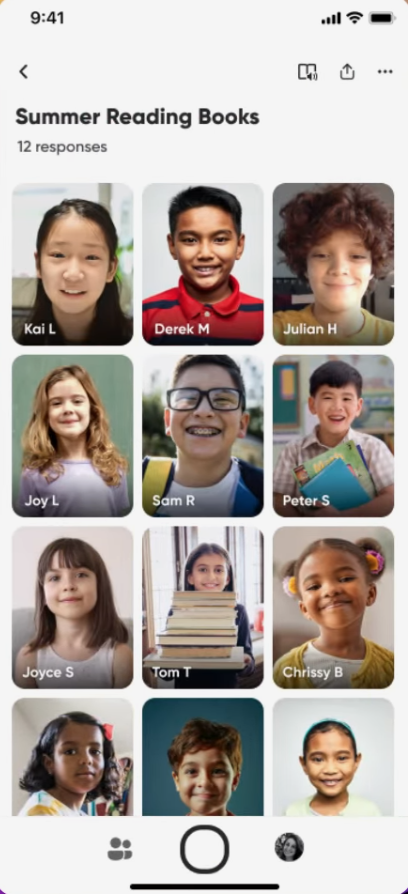
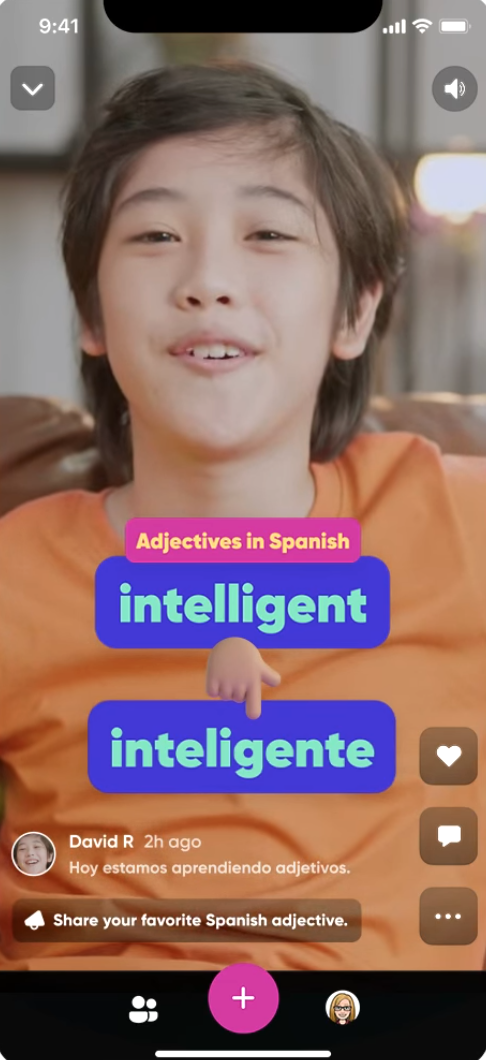
In recent years, the digital learning platform Flip has experienced a surge in its user base (Donovan, Besser, & Green, 2022). Accessible via a web browser or a mobile app, Flip allows teachers to post topics organized in grids containing videos and text-based material (Figure 1), and students to submit their own videos (Johnson & Skarphol, 2018). Additionally, students and teachers are able to add items to their uploaded videos, such as sticky notes and stickers (Figure 2), along with responding to other videos by adding comments and follow-up videos (Johnson & Skarphol, 2018). Furthermore, the uploaded videos can include automatically transcribed closed captioning. The use of Flip is argued to amplify student voice and strengthen their social learning communities, allowing students to discuss their ideas and experiences with their peers (Johnson & Skarphol, 2018). Subsequently, there has been an increasing body of literature that focuses on the use, frequency, and implementation strategies of Flip.
Recent research on the use of Flip in tertiary settings has revealed several positive effects (Casañ‑Núñez, 2021; Keiper et al., 2021; Lowenthal & Moore, 2020; Miskam & Saidalvi, 2019). Studies have found that Flip can improve ESL learners’ speaking performance (Sukerti, Handayani, & Aryana, 2022) and reduce their speaking anxiety (Tuyet & Khang, 2020). However, there is a lack of research examining the potential of Flip to foster collaboration as a computer-supported collaborative learning (CSCL) tool. Donovan, Besser, and Green (2022) surveyed educators of varying teaching experience to investigate how Flip might facilitate collaboration. Through their research, they found that Flip can encourage creativity by allowing learners to participate in discussions, explore topics, give feedback, and hold student led conferences. Moreover, Flip enables learners to build an online community and collaborate with students from different countries to share languages and cultures. To gain a better understanding of the use of Flip in the ESL classroom, further research is needed to investigate the unique value of Flip for teaching speaking skills and fostering collaborative skills.
Research Methodology
This study aims to employ a mixed-method research design. The effectiveness of using Flip to improve ESL secondary school students’ oral presentation skills and their experience of using Flip with the integration of online peer feedback will be investigated and explored by using both quantitative and qualitative data.
The present study will utilize a volunteer, convenience sampling method to select 35 secondary four (grade 10) students from a public secondary school in Hong Kong. Four research instruments will be employed to collect data: 1) video excerpts, 2) semi-structured interviews, 3) a questionnaire, and 4) an oral presentation rubric, which is adapted from the assessment rubric used in the Hong Kong Diploma of Secondary Education Examination. Video excerpts will include oral presentation videos, peer feedback videos, and reflection videos to explore the participants’ experience of using Flip and the effectiveness of their peer feedback. A questionnaire will be developed by the researcher to investigate the students’ perception and experience of using Flip and their collaborative and negotiation activities in Flip. The interviews will support the data collected from the questionnaires and video excerpts. The procedure of the study is outlined in Table 1.
| Stage | Procedure |
|---|---|
| Stage 1: | A pretest will be administered to assess the students' oral presentation skills prior to the use of Flip. Students will be asked to give a one-minute presentation, which will be recorded on a camcorder and evaluated by two independent raters using an oral presentation rubric. |
| Stage 2: | Students will be given a 30-minute tutorial to familiarize themselves with Flip. |
| Stage 3: | 1st oral presentation – Students will record their oral presentation using Flip. All students will provide feedback by recording a follow-up video to at least two other videos. Students are encouraged to expand the discussion by posting a follow-up video to the follow-up videos they have received. Then, students will make a reflective video when they have reviewed the follow-up videos and identified their strengths and weaknesses in the video. |
| Stage 4: | 2nd oral presentation – Students will record their oral presentation using Flip. The video must be an improved oral presentation based on the peer feedback given on their previous oral presentation. All students will provide feedback by recording a follow-up video to at least two other videos. Students are encouraged to expand the discussion by posting a follow-up video to the follow-up videos they have received. Then, students will make a reflection video when they have reviewed the follow-up videos and identify their strengths and weaknesses in the video. |
| Stage 5: | 3rd oral presentation – following the same steps in Stage 4. |
| Stage 6: | 4th oral presentation – following the same steps in Stage 4. |
| Stage 7: | A post-test will be administered to assess the students' oral presentation skills after using Flip. Students will be asked to give a one-minute presentation, which will be recorded on a camcorder and evaluated by two independent raters using an oral presentation rubric. |
| Stage 8: | A questionnaire will be administered, and seven students will be selected for a focus group interview. |
One week will be allocated for each stage, hence the data collection procedure for this study will take approximately eight weeks. All oral presentation videos will be evaluated by two independent raters using an oral presentation rubric. The data obtained from the questionnaire and oral presentation rubric will be analyzed using descriptive statistics. The peer feedback videos and reflection videos will be transcribed using the automatic closed captioning provided by Flip. The data from the focus interviews and transcripts of the video excerpts will be analyzed using thematic analysis.
Expected Outcomes
It is anticipated that the results will provide evidence on the potential of Flip as a CSCL tool to support the development of speaking ability in ESL learners. It is expected that the results will demonstrate that Flip is effective in helping ESL learners develop oral presentation skills and can be used to promote the development of collaborative skills. Additionally, it is anticipated that the results will shed light on how peer feedback via Flip can facilitate the negotiation of meaning and creation of joint-effort ideas. Finally, it will add to the existing body of knowledge about the utilization of CSCL in promoting the development of ESL speaking ability, especially in an Asian context. However, given that the sample size is only 35, the findings should not be treated as reflecting the perceptions and experiences of all secondary four (grade 10) students in Hong Kong.
Conclusion
In conclusion, this research proposal has outlined the potential of the use of Flip as a CSCL tool to support ESL speaking skills. The literature review has revealed the need for CSCL in ESL learning and has provided evidence of its successful use in language learning. Furthermore, the research methodology has outlined a mixed-method approach to investigate the impact of Flip on ESL speaking skills and collaborative skills. It is anticipated that the results of this research will provide an understanding of the potential of Flip to support ESL speaking skills and will reveal how CSCL can be effectively utilized in the language classroom.
References
Adamidi, F., Paraskeva, F., Bouta, H., & Gkemisi, S. (2017). Problem-based learning in language instruction: A collaboration and language learning skills framework in a CSCL environment. In Learning Technology for Education Challenges: 6th International Workshop, LTEC 2017, Beijing, China, August 21–24, 2017, Proceedings 6 (pp. 133–146). Springer International Publishing.
Boonkit, K. (2010). Enhancing the development of speaking skills for non-native speakers of English. Procedia - Social and Behavioral Sciences, 2(2), 1305–1309.
Casañ‑Núñez, J. C. (2021). Creating a Positive Learning Environment in the Online Classroom with Flipgrid. The EuroCALL Review, 29(2), 22–32.
Donovan, L. C., Besser, E., & Green, T. D. (2022). One Tool With Multiple Uses: An Innovation Configuration Map of Flip in Education. Journal of Digital Educational Technology, 2(3), ep2208.
Goodyear, P., Jones, C., & Thompson, K. (2014). Computer-supported collaborative learning: Instructional approaches, group processes and educational designs. Handbook of Research on Educational Communications and Technology, 439–451.
Johnson, M. L., & Skarphol, M. K. (2018). The Effects of Digital Portfolios and Flipgrid on Student Engagement and Communication in a Connected Learning Secondary Visual Arts Classroom (Master's dissertation). St. Catherine’s University, St. Paul, Minnesota.
Keiper, M. C., White, A., Carlson, C. D., & Lupinek, J. M. (2021). Student perceptions on the benefits of Flipgrid in a HyFlex learning environment. Journal of Education for Business, 96(6), 343–351.
Lehtonen, T., & Tuomainen, S. (2003). CSCL – a tool to motivate foreign language learners: The Finnish application. ReCALL, 15(1), 51–67.
Lowenthal, P. R., & Moore, R. L. (2020). Exploring student perceptions of Flipgrid in online courses. Online Learning, 24(4), 28–41.
Miskam, N. N., & Saidalvi, A. (2019). The use of Flipgrid for teaching oral presentation skills to engineering students. International Journal of Recent Technology and Engineering, 8(1), 2.
Namaziandost, E., Neisi, L., Kheryadi, & Nasri, M. (2019). Enhancing oral proficiency through cooperative learning among intermediate EFL learners: English learning motivation in focus. Cogent Education, 6(1), 1683933.
Shumin, K. (1997). Factors to consider: Developing adult EFL students' speaking abilities. English Teaching Forum, 35(3), 8.
Sukerti, G. N. A., Handayani, L. N. C., & Aryana, I. N. R. (2022, December). Flip as the Asynchronous Video-Based Learning Platform in English for Specific Purposes. In Prosiding Seminar Nasional Riset Linguistik dan Pengajaran Bahasa (Vol. 4, No. 1, pp. 192–206).
Tam, M. (1997). Building fluency: a course for non-native speakers of English. English Teaching Forum, 35(1), 26.
Tuyet, T. T. B., & Khang, N. D. (2020). The Influences of The Flipgrid App on Vietnamese EFL High School Learners’ Speaking Anxiety. European Journal of Foreign Language Teaching, 5(1).
Zaremba, A. J. (2006). Speaking professionally. Canada: Thompson South-Western.
Zhang, Y. (2009). Reading to speak: Integrating oral communication skills. English Teaching Forum, 47(1), 32–34.