Impromptu
A mobile app that uses speech recognition and generative AI to give secondary-school English learners immediate, personalized feedback on their spoken responses.

A mobile app that uses speech recognition and generative AI to give secondary-school English learners immediate, personalized feedback on their spoken responses.
English teachers in Hong Kong routinely manage classes of up to 40 students, making individualized speaking feedback nearly impossible. Students rarely get enough practice opportunities, and when they do, feedback is delayed or absent entirely. I designed Impromptu to address this gap: students receive immediate, criterion-referenced feedback on their spoken responses without a teacher needing to be present.
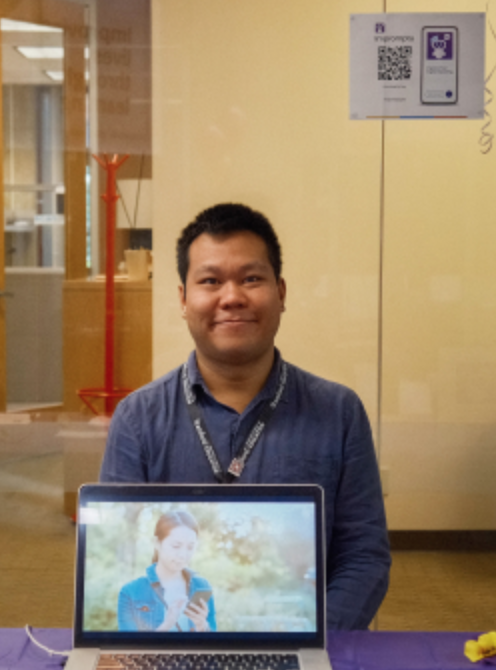
📰 Featured in Stanford GSE News — "25th Annual Learning Design & Technology Expo at Stanford Showcases Projects Made with Love" (Aug. 2023)
Discovery
I surveyed English learners on Prolific to map pain points broadly, then conducted in-depth interviews with 20+ Hong Kong secondary students. The pattern was clear: students wanted more speaking practice but felt anxious performing in front of peers, and had no way to get feedback outside the classroom.
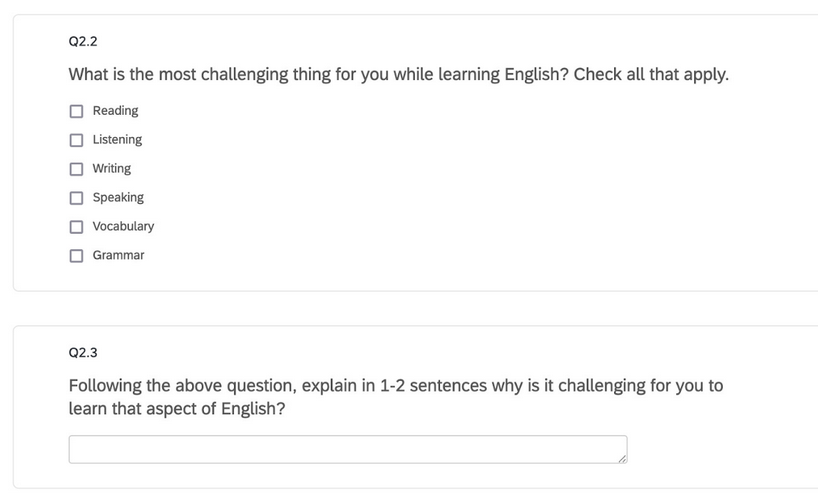
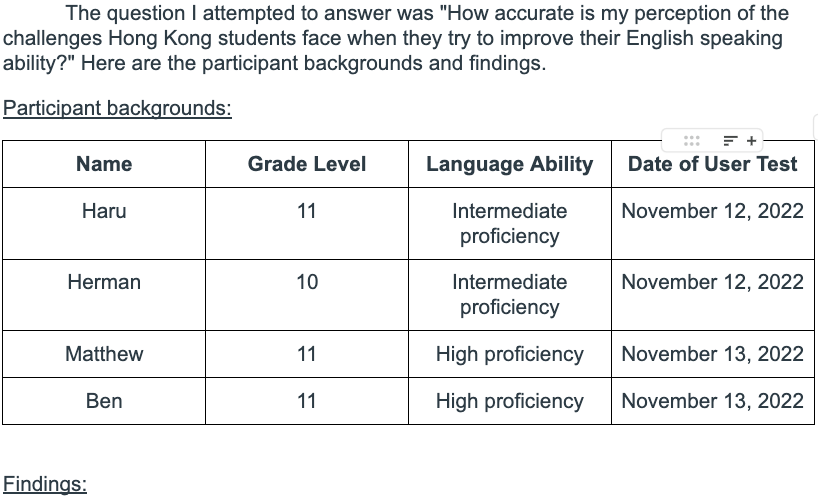
Interview data pointed to a specific unmet need: a low-stakes environment to practice speaking and receive honest, specific feedback. This became the core design principle for Impromptu.
Concept Validation
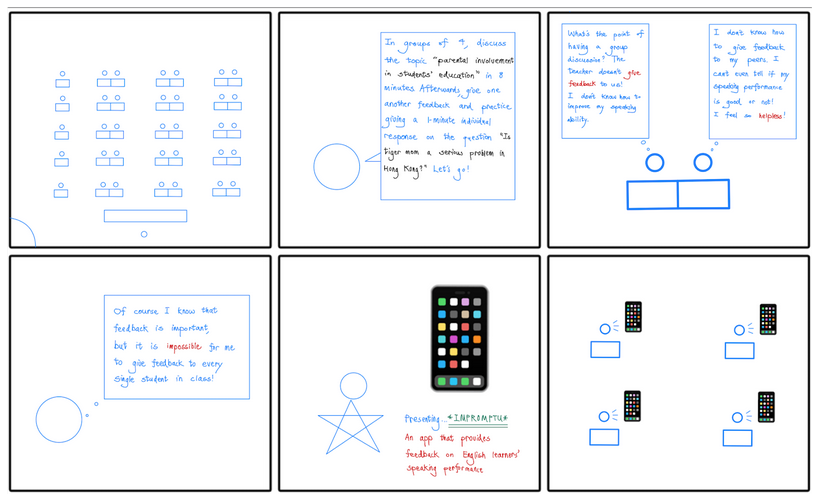
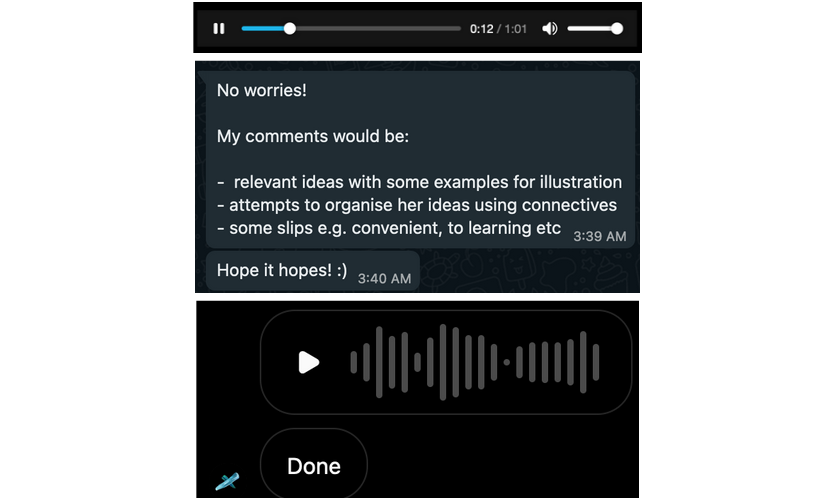
I developed a storyboard showing a student using an AI feedback tool and walked English teachers through it. Teachers confirmed the core problem but raised concerns about feedback quality and whether students would trust AI-generated comments. This shaped a key design decision: feedback had to be specific, criterion-referenced, and explained rather than simply scored.
Design & Prototyping
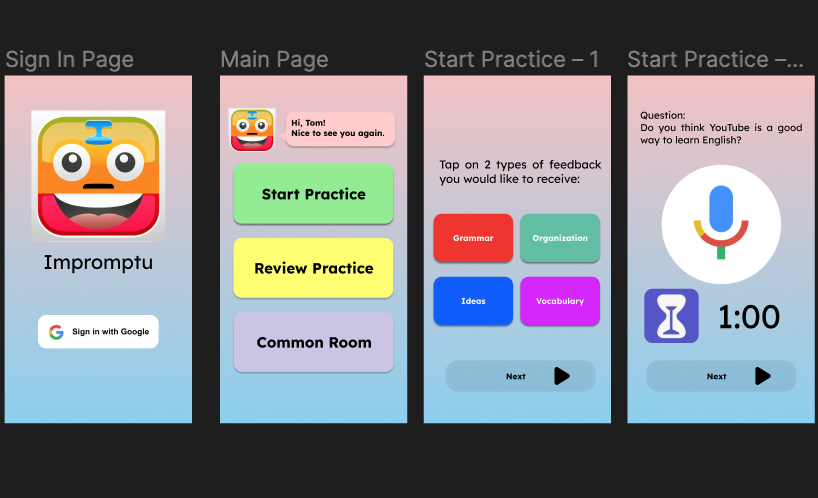
I ran 10+ prototype tests with 50+ testers, gathering feedback on the AI feedback format, feature prioritization, and overall experience. The most actionable finding: testers wanted feedback to feel like a conversation, not a grade sheet. This pushed me toward a more dialogue-driven feedback design.
Early prototypes used a rainbow color scheme that, in testing, proved visually distracting and unfocused. Working with a UX student, I simplified the palette to a single primary color, purple, which reduced cognitive load and gave the app a cleaner, more professional feel.
Validation
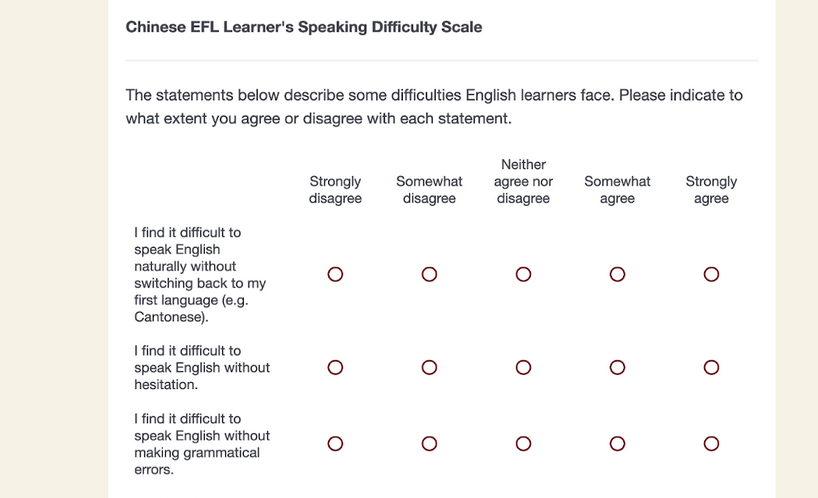
I designed pre- and post-surveys to measure changes in speaking ability, confidence, and anxiety, and conducted a small-scale study with Hong Kong students. Participants reported that the app made speaking practice feel accessible and low-stakes. They particularly valued the AI feedback for identifying specific errors and offering alternative expressions, which gave them practice they could not get in the classroom.
I added a daily streak feature, assuming it would drive retention the way it does in Duolingo. It didn't. Fewer than 15% of users engaged with it consistently. The lesson: mechanics borrowed from successful products don't automatically transfer. Retention depends on understanding why your specific users open the app, not what keeps a different app's users coming back.
Iteration
I conducted low-resolution prototype tests to gather user opinions on future features, including a landing page to recruit testers and a community "Common Room" feature where students could share and listen to each other's recordings.
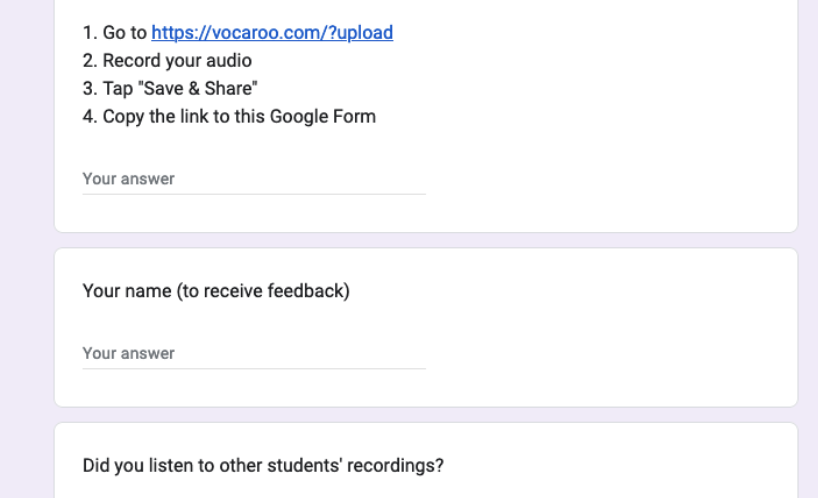
Impromptu reached around 400 downloads before development concluded after graduation. The core concept was validated: students were willing to practice speaking independently when they had a reliable, low-stakes feedback mechanism.
If I were building it again, I would expand beyond individual practice toward collaborative features: real-time group discussions, multi-student conversation sessions, and a teacher dashboard showing class-wide error patterns. The product I built solved the individual practice problem. The harder and more impactful problem is connecting that practice back to the classroom.
Want to see the product?
The app is archived but still accessible.