Say!
A language learning app where learners build phrases from the ground up, practice pronunciation, and have conversations with a scaffolded AI language buddy.

A language learning app where learners build phrases from the ground up, practice pronunciation, and have conversations with a scaffolded AI language buddy.
Most language learning apps teach vocabulary and grammar in isolation. Beginners face a different challenge: they may know individual words but don't know how to assemble what they actually want to say. This gap, between knowing words and constructing meaningful expression, is where many learners give up. Most apps offer no scaffolding for it.
Say was built around this insight: give learners a block-based phrase builder so they can construct sentences from scratch, practice them, and gradually build conversational confidence.
Discovery
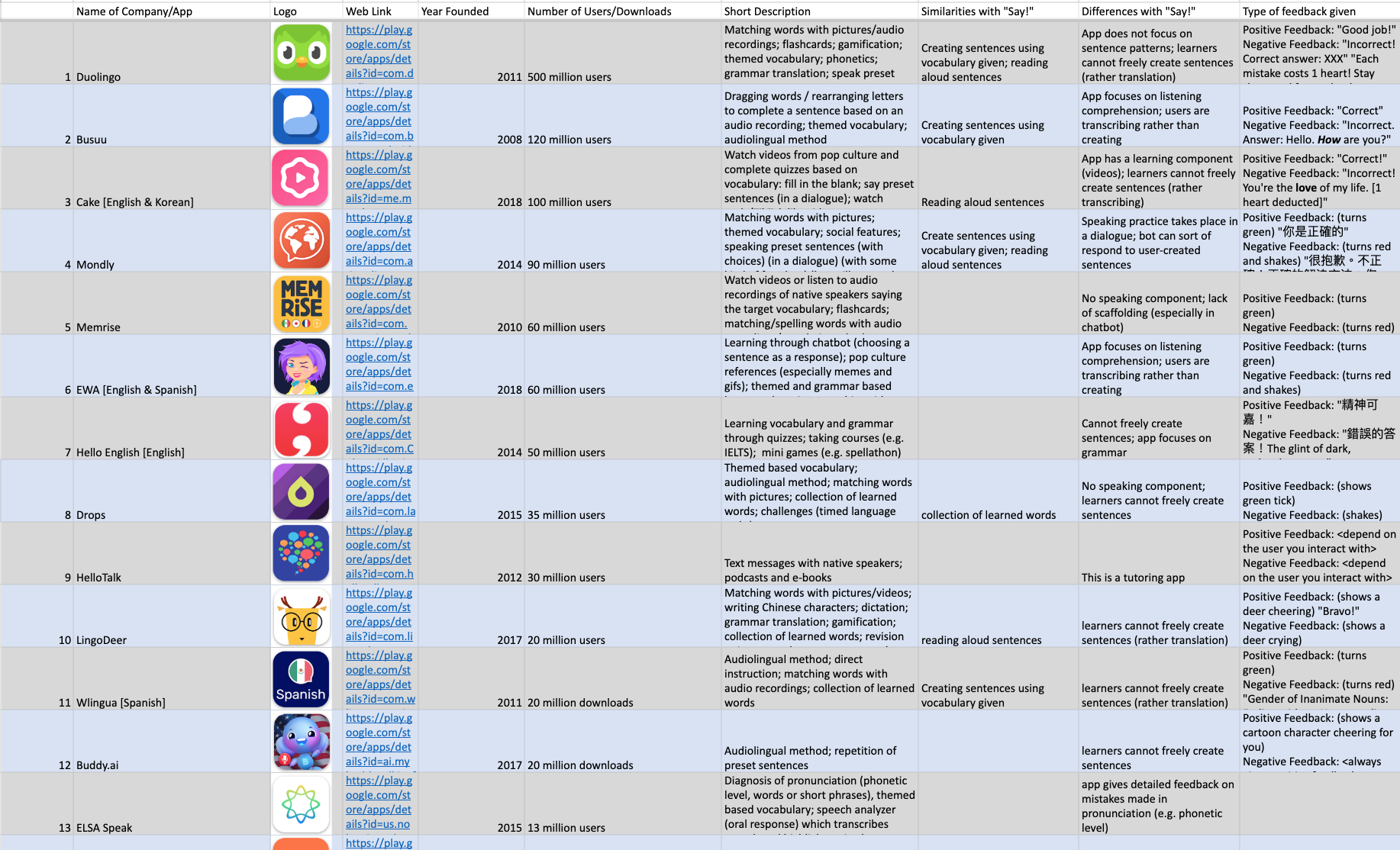
I tested 30+ language learning apps to identify gaps and define our unique selling points. Most apps focused on gamified vocabulary drills or grammar exercises. Very few addressed the challenge of sentence construction, and none provided meaningful scaffolding for learners who couldn't yet express a complete thought.
Instructional Design
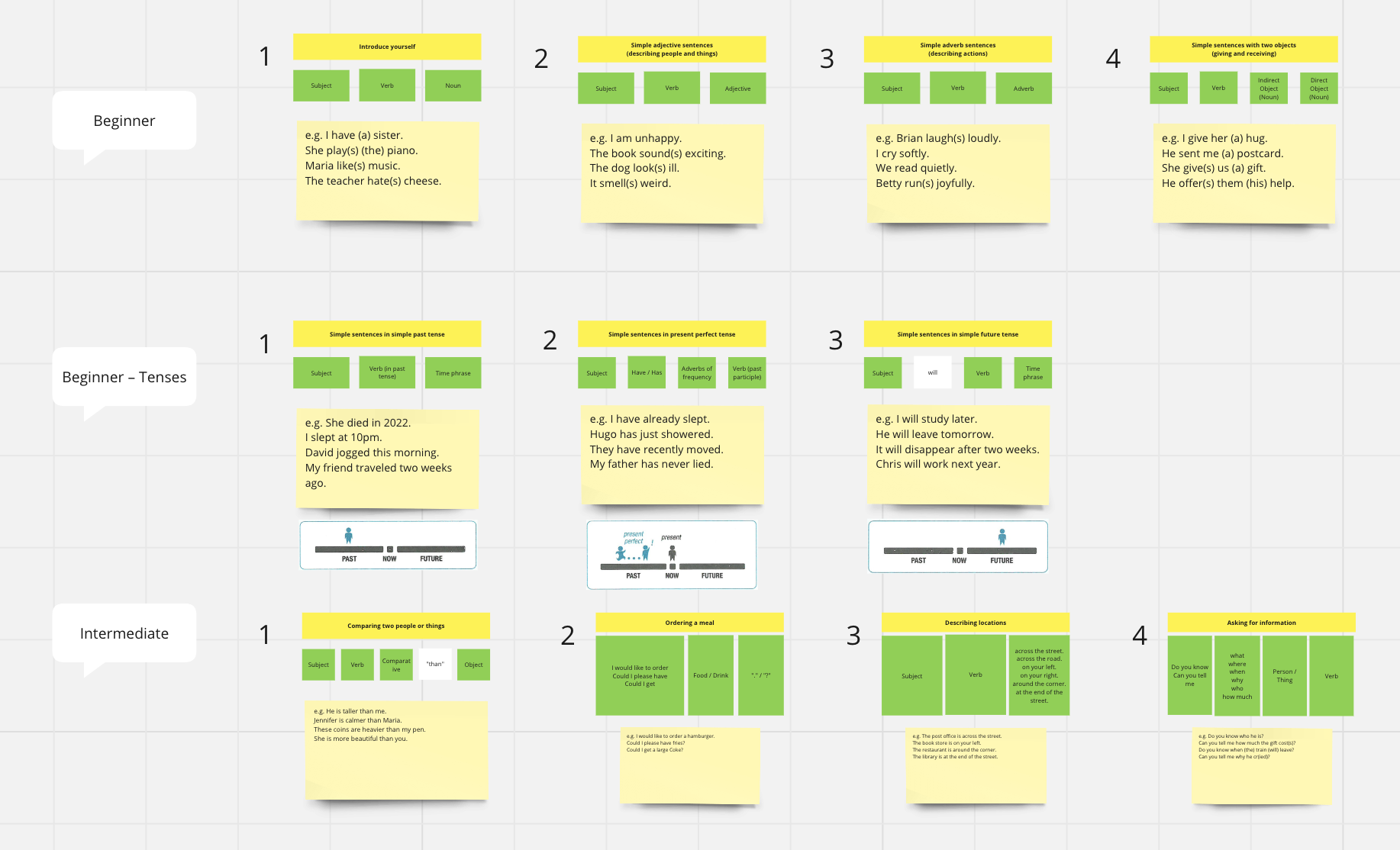
Drawing on my background in linguistics and language teaching, I designed the instructional logic behind the phrase builder: how phrases are sequenced, how blocks are categorized, and how learners progress from simple to complex constructions. The goal was to make phrase-building feel intuitive rather than like a grammar exercise.
User Research
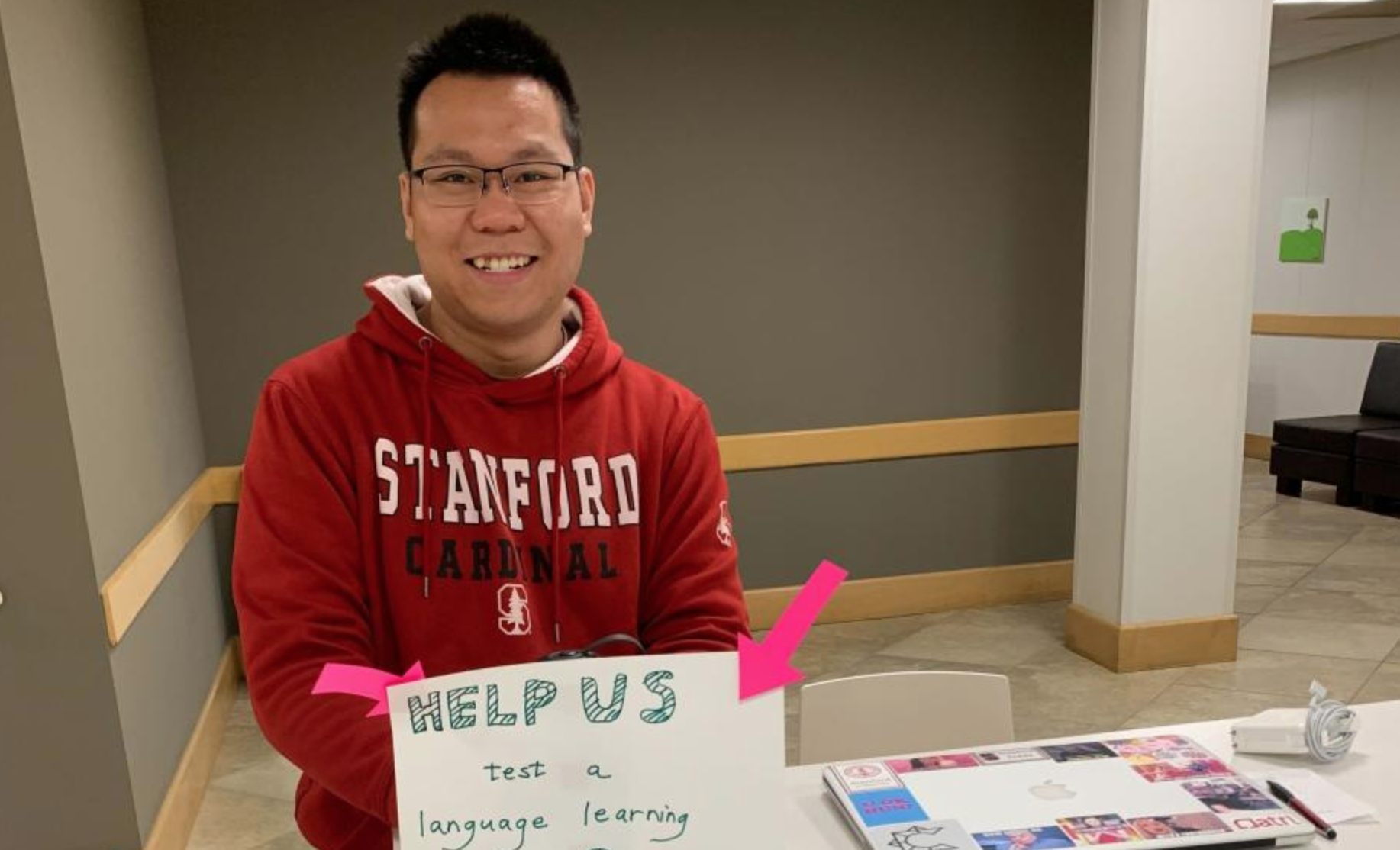
I conducted 10+ user testing sessions and interviewed 50+ active users to understand how people used the app and where they got stuck. A consistent theme emerged: learners were most engaged when building phrases about topics they personally cared about, such as sports, K-pop, or fashion. This wasn't just a usability observation. It pointed to a deeper design principle about intrinsic motivation.
Design Iteration
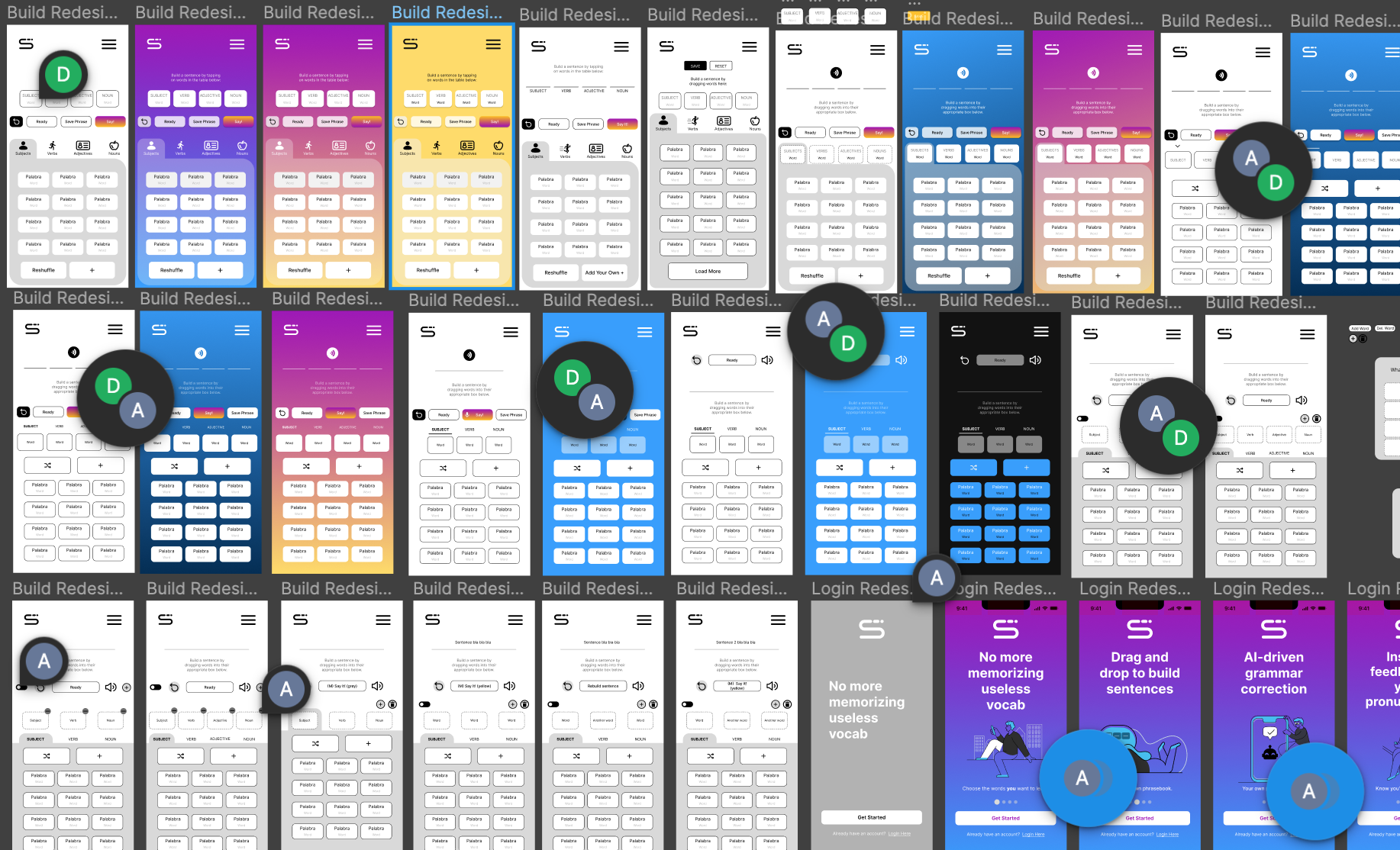
Based on user feedback, I refined the UI for both the phrase builder and the phrasebook. Testing revealed that learners needed clearer visual hierarchy when selecting blocks, and that the phrasebook needed better organization so users could revisit phrases they had built.
Feature Design
The most significant addition to the product was the Buddy AI chatbot. Most AI chatbots leave beginners stranded. Without enough language foundation, they cannot think of what to say and give up. Buddy was designed differently. It suggests responses based on the conversation, offers translation support, and lets users construct replies using the block system. This scaffolding made the chatbot accessible to learners who would otherwise find open-ended AI conversation overwhelming.
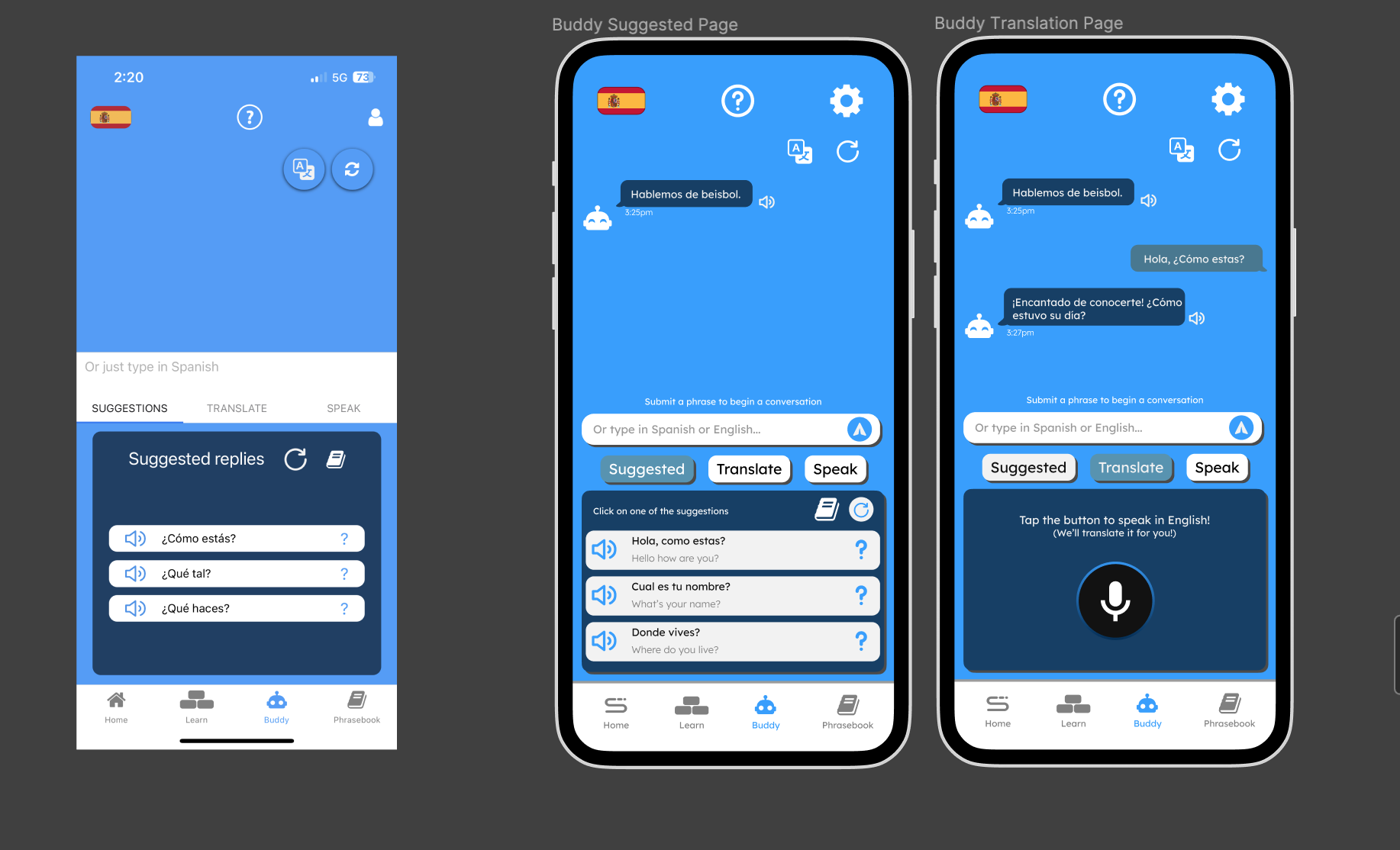
Learners are most motivated when they can talk about things they genuinely care about. The phrase builder's strength wasn't just its block-based structure. It was that learners could use it to express their own interests from day one. Personalization by topic was the differentiator that no competitor app was addressing.
Launch & Growth
I wrote the App Store description, designed App Store screenshots, and ran A/B tests and promotional campaigns post-launch to grow downloads and daily active users. I also ran surveys on Prolific to gather feedback from foreign language instructors and analyzed usage statistics to identify which features were driving engagement.
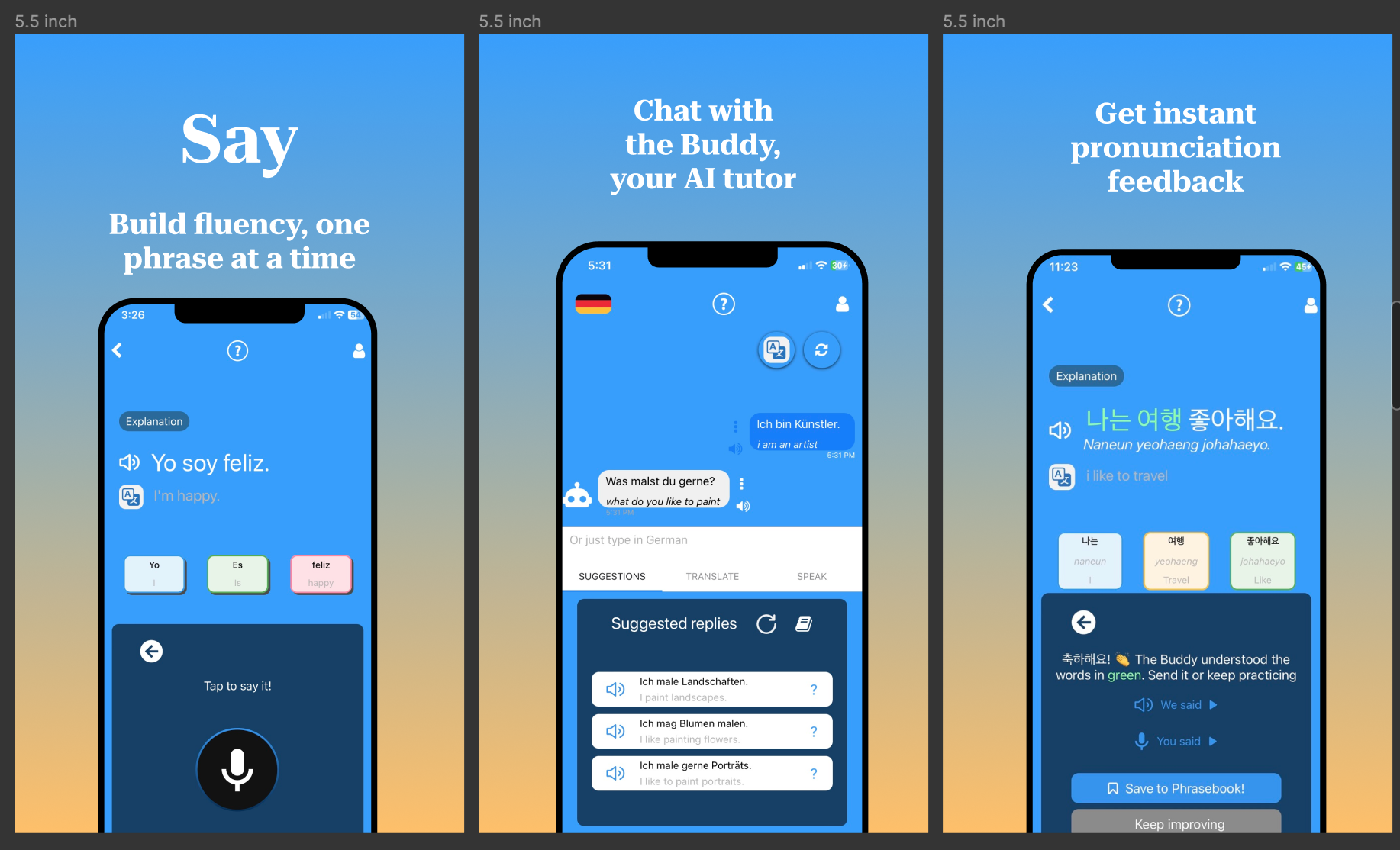
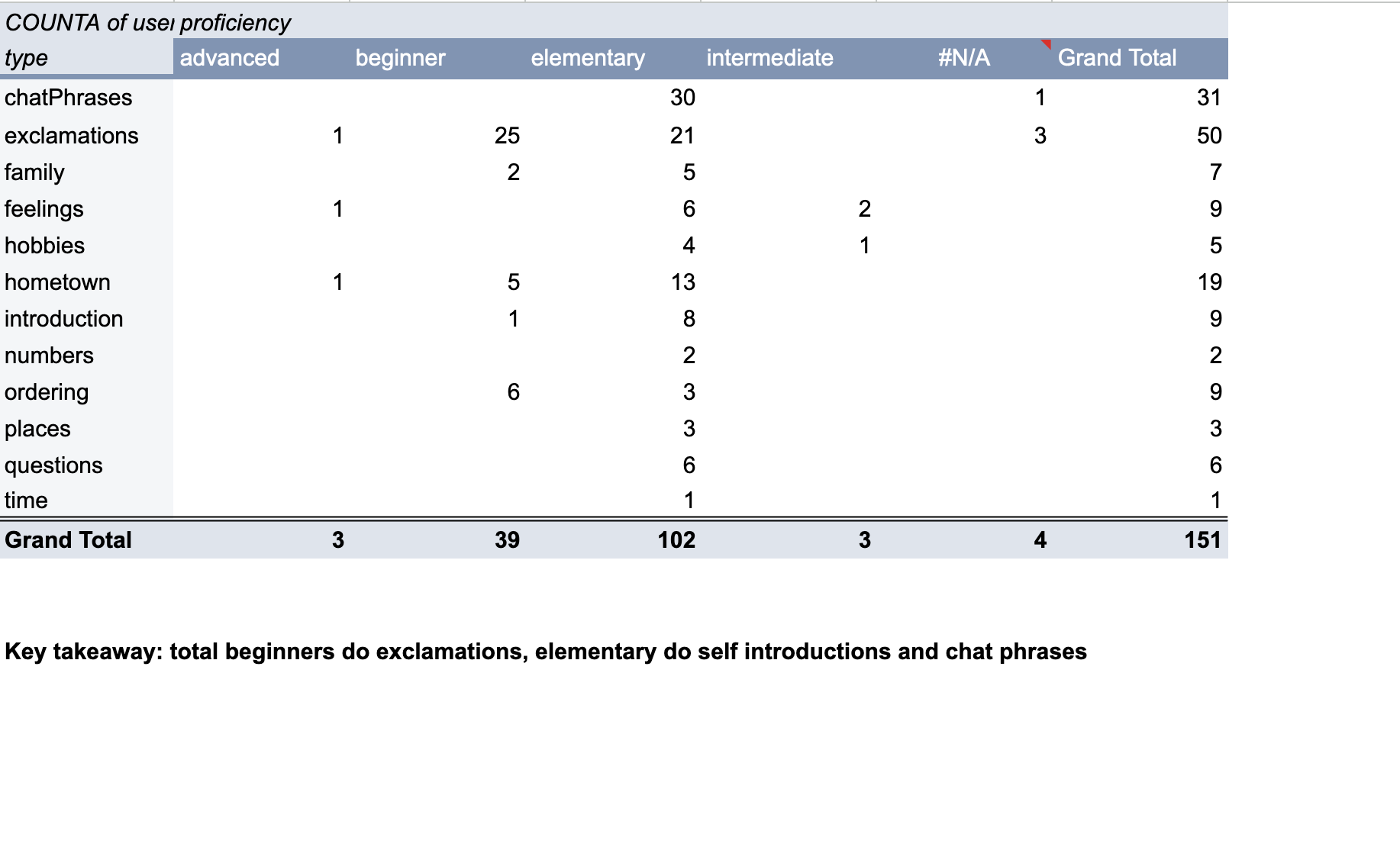
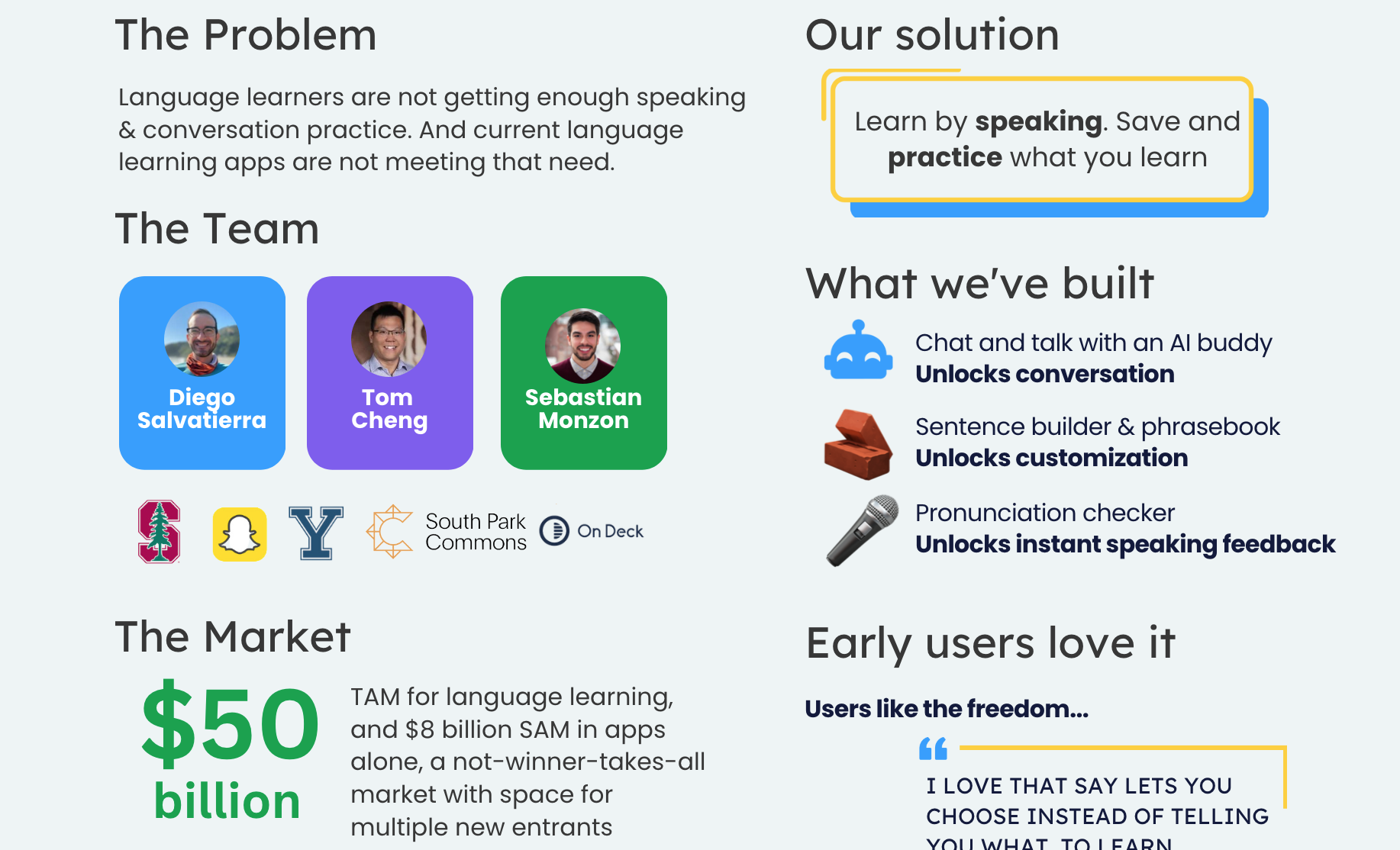
Usage data helped us identify drop-off points and prioritize feature improvements. I also designed a one-pager and pitch deck to present the app to potential investors and partners.
Say reached over 600 downloads before the project was discontinued. The phrase builder and Buddy chatbot were the most-used features, validating the core design hypothesis: beginners need construction scaffolding, not just vocabulary drills.
One direction we explored but didn't build was an energy sphere system to limit AI chatbot usage and create a monetization path. The design challenge was making the constraint feel fair rather than punitive, something worth exploring in a future product.
If I were building it again, I would invest more deeply in personalizing the phrase content by learner interest from onboarding. The insight that topic relevance drives motivation came from research, but the product didn't fully act on it yet.
Want to see the product?
The app has been discontinued.